Tuesday, 10 May 2016

Aero Contractors Sacks 100 Workers Outsourced by Skyborne

Some Nigerians working with Aero Contractors have lost their jobs following a structural process that took place in the establishment. Not fewer than 100 workers outsourced to Aero Contractors by Skyborne Ltd have been sacked following the airline’s decision to review its relationship with the company. The airline confirmed the development in a statement issued on Friday by its Media Consultant, Mr Simon Tumba, which was obtained by the News Agency of Nigeria (NAN) in Lagos.

The Asset Management Company of Nigeria (AMCON), which owns 60 per cent of the airline’s shares, had dissolved the previous management and appointed Capt. Fola Akinkuotu, as its Managing Director. Akinkuotu, the immediate-past Director-General of the Nigerian Civil Aviation Authority (NCAA), has been given the task of rebuilding the airline and helping it to regain its position as a key player in the industry. (NAN)

The statement said: “In the course of reorganizing and repositioning its business, Aero Contractors has reviewed its relationship with Skyborne by cutting down some of the services required from the company. “This will help the company to invest more resources to enhance customer service. For the records, Aero has not sacked any of its staff.’’ NAN, however, gathered that most of the affected contract workers had spent some years with the airline. A letter to one of the affected workers which was obtained by NAN claimed that the sack was as a result of the ongoing restructuring in the airline.

The letter reads in part, “Dear colleague, in the light of the ongoing restructuring at Aero, we regret to inform you that your services are no longer required and employment with SBL terminated with immediate effect. “Please, return all company property to your Manager/Supervisor by 8:00 a.m. on April 28. We regret any inconvenience caused.’’ NAN reports that Aero Contractors had been in the news in recent times as allegations of corruption and diversion of funds were levelled against the past management.

F-22 Raptor's Helmet

F-22 Raptor's Helmet Mounted Display (HMD), said to be the most sophisticated of its kind.

Monday, 9 May 2016

Ban On Drones!

Due to the recent security challenges faced in Nigeria,  the Nigeria Civil Aviation Authority commonly known as NCAA has hereby placed a ban on all forms of drones in the country .

However, Drones can only be flown with special permission be gotten from the Aviation Authority here in Nigeria.

Drone owns, be advised on the update. Stay turned....  follow me on IG@aviatorcruz

Sunday, 8 May 2016

Flying in a Sunny Day???

Most of us wonder that is it about flying on Sunny days! In aviation, Air density decreases with increasing temperature and altitude. At any given true airspeed, lower air density reduces the amount of lift generated by the wings or the rotors of an aircraft, which may hamper an aircraft's performance and hence its ability to operate safely. The reduced density also reduces the performance of the aircraft's engine, compounding the effect. Aviators gauge air density by calculating the density altitude.

On sunny days, you will noticed that the level of TURBULENCE is greater than on a cooler day. However,  this is no problem for pilots. In hot days,  Airplanes require a longer takeoff run, potentially exceeding the amount of available runway. It's can also be a problem cause small airport got short runways.  While unsafe at any altitude, an overloaded aircraft is exponentially more dangerous under hot and high conditions. One notable crash was that of Jessica Dubroff's plane in 1996, flying out of the Cheyenne, Wyomingairport (elevation 6,159 ft / 1,878 m)....

So when next you think of making a trip, try choosing a cooler day.

Follow me on Instagram @aviatorcruz

Saturday, 7 May 2016

12 Things Most People Don't Know About Flying


There are a lot of secrets that pilots know but keep to themselves. A few of them are things you're probably better off not knowing. And a few are secrets that, once you know them, can make air travel a little bit better. Flying in the coming months? Here are 12 secrets pilots won't tell you, but I will!!


1. Morning Flights Are the Smoothest


On one hand, morning flights are a drag simply because you have to get up so early. No one likes the alarm going off at 3 a.m. But if you're a nervous flyer, you should know that morning flights are the smoothest. According to the Daily Mail, lighter winds and fewer storms mean less turbulence.


2. Breakdowns Happen


Planes are no different than any complex machine in that they occasionally break down. It happens more often than you might think, but thanks to rigid inspections, these problems are rarely life-threatening. And, says the Daily Mail, more serious troubles like power failures and engine problems are either fixed before take-off or dealt


3. Pilots Sleep while flying


The Daily Mail reports that half the pilots surveyed in a 2012 study admitted to nodding off. That's not as big a deal as you might think. First, the autopilot takes care of much of the flight, and second, there's a co-pilot. On long flights pilots often take breaks and put the co-pilot in charge. Some newer planes even have designated sleeping areas
 

4. Pilots Eat Different Food


Another pilot secret, according to the Daily Mail, is that pilots don't eat the same food as those of us back in economy. They either chow down on special meals or enjoy the same fare as those in business class. Sometimes they even bring their own food. Another secret: the captain and co-pilot will eat different meals, just in case of food poisoning.


5. Bumpy Landings Are Often Done on Purpose


When you experience a hard landing, it doesn't mean that it was a bad landing. The Daily Mail says that if the runway is wet, the pilot will bring the plane down hard to prevent the it from skidding.


6. Planes Get Hit by Lightning


Planes get hit by lightning all the time. According to the Daily Mail, it happens at least once a year to most planes and does no damage.


7. Limited Emergency Oxygen


In case of an emergency, oxygen masks will deploy from the ceiling. But did you know that there isn't an endless supply of air? The Daily Mail says that there's enough for about 15 minutes. But don't panic, that's more than enough time for the plane to descend to an altitude where you can breathe without a mask.


8. Avoid the Coffee (and tea and water)


A pilot writing on Quora advises that you should avoid airplane coffee, calling the on-board potable water used to make it 'disgusting'. The Wall Street Journal investigated the quality of on-board water in the past and found all sorts of nasty critters swimming around. If you want to be sure that your water is just water, buck up for something in a bottle or can and avoid anything that uses airplane water.


9. Seatbelt Sign Errors


Ever wonder why the 'fasten seatbelt' sign is on, even when the flight is smooth? It's because the pilot forgot to turn it off. Whoops!..


10. Guns Are Allowed in the Cockpit on US Flights


In the US, Federal Flight Deck Officers (a program of the US Federal Air Marshal Service) can carry a firearm in the cockpit. However, they have to undergo rigorous training and screening.


11. Germs Are Everywhere!


You already know to avoid an aircraft's on-board water. But it's much harder to avoid germs in the cabin. According to Reader's Digest, they're on every surface. When people get sick after flying it's generally because of something they touched, not something in the air. Pack some disinfectant wipes to clean your tray, armrest, touch screen, and seatbelt buckle.


12. A Baby on the Lap is Dangerous


Think you can hold on to your child if there's an impact or sudden deceleration? Not a chance, reports Reader's Digest. Your kid is going to become a projectile. If you want to ensure her safety, use safety seat.


Monday, 21 March 2016

What the Germanwings final report tells us!


In summary, the report reveals that Andreas Lubitz, taking advantage of the absence of the commander in the cockpit, took the controls of the aircraft and modified flight parameters to lower the plane to get it crashed. He blocked the door of the cockpit and ignored the 11 calls from air traffic control in three different frequencies, as well as calls and knocks on the door of the passenger cabin.

The co-pilot was in a state of medical leave and just a few days earlier a doctor had recommended Lubitz a treatment in the hospital. However, neither this nor other sick leave recommendations were referred to Germanwings and no doctor reported Lubitz state, so neither the company nor the authorities could take any action to prevent him fly on the day of the accident.

"Following the report, debates and questions on aviation security are flamed up"

On the other hand, the relatives of the victims claimed that the legal changes are necessary to improve the system while asking that appropriate measures must have been taken to ensure that companies comply with the obligation to have efficient mechanisms to control their employees. Furthermore, medical professionals are calling for clear rules to find a balance between patient privacy and public safety.

The report cited possible reasons that could have led the First Officer Lubitz to hide his medical state from the company: the fear of losing its accreditation and flying license as a professional pilot and the possible economic consequences.

Although this case is very particular, It should be taken into account that the poor working conditions and the continuing pressure on the crew in some cases by the airlines, may have direct effects on the security of operations and hence passengers.

It is recalled that only two days after the fatal accident had happened, the University of Ghent (Belgium) denounced a study "anomalies in the aviation business" at the request of the European Commission. This report showed that an alarming number of pilots are flying on the low-cost airlines, who are not directly connected with the company. In most cases, these economically dependent airlines rely on the crew support from third parties or their parent companies to avoid paying taxes or social security of their workers.

These practices contribute to the distortion of the aviation market's competitive advantage. The report determines that the business model of the airlines should be reviewed essentially in terms of the safety of operations.

The study also points out the immense importance of the selection processes and training. A comprehensive selection process, Improving the education of pilots, focusing on awareness of mental health during training, recognition of problems with peers and mechanisms for reporting them are considered as vital instruments to prevent future accidents.

What is not in doubt is that the sector should study more and better measures to identify all factors that lead to an accident and ensure flight safety, not only the technical factors but also the human factor.

Business and private jets based in Nigeria


In recent months, wild guesses have been made in the Nigerian press about the number of private and corporate jets based in Nigeria and/or owned by Nigerians. The NCAA will not provide the accurate numbers, but a list of identified active private and business jets is provided below. The list is not complete and might not be entirely accurate, but it does show that the numbers circulating in the press are slightly exaggerated.

Aircraft on the Nigerian register:
Boeing 737-700/BBJ (5N-FGT) – Nigerian Air Force
Dassault Falcon 7X (5N-FGU) – Nigerian Air Force
Dassault Falcon 7X (5N-FGV) – Nigerian Air Force
Gulfstream G550 (5N-FGW) – Nigerian Air Force
Gulfstream GV (5N-FGS) – Nigerian Air Force
Cessna Citation II (NAF 050) – Nigerian Air Force
Embraer EMB135BJ Legacy 600 (5N-RSG) – Rivers State Government
Embraer EMB145LR (5N-BJM) – Bauchi State Government / Associated Aviation
Embraer EMB145EU (5N-BOZ) – Taraba State Government / Air Taraba / OAS Helicopters
Cessna 560XLS Citation Excel + (5N-HAR) – Nigeria Police
Cessna 525C CitationJet CJ4 (5N-DIA) – Nigeria Customs Service
HS 125-700 (5N-AVK) – Nigerian Airspace Management Agency
Hawker 4000 (5N-NOC) – Nigerian National Petroleum Corporation
BAe 125-800 (5N-NPC) – Nigerian National Petroleum Corporation
Hawker 800A (5N-BNE) – King Airline
Hawker 800A (5N-BMR) – King Airline
Hawker 800XP (5N-BNM) – SkyJet Aviation
Learjet 45 (5N-BLW) – ARM Investment Managers / Associated Aviation / Hangar8
BAe 125-700 (5N-BFC) – Associated Aviation
BAe 125-700 (5N-DAO) – Associated Aviation
Hawker 800XP (5N-JMA) – Arik Air
Hawker 800XP (5N-JMB) – Arik Air
Learjet 45XR (5N-LDM) – MaxAir
Gulfstream GIV (5N-BOD) – SkyBird Air
Cessna 560XLS Citation Excel (5N-BJS) – Pan African Airlines
Cessna 560XLS Citation Excel (5N-BOQ) – Pan African Airlines
Learjet 45 (5N-DAL) – Dana Air
BAe 125-600 (5N-EMA) – M. Adenuga / Southern Air – stored at Lagos
Hawker 800A (5N-QTS) – S. Iwuajoku / Quits Aviation
Hawker 800XP (5N-IZY) – A. Izinyon / Izy Air
Cessna 550 Citation Bravo (5N-IZZ) – Izy Air
BAe 125-700 (5N-BEX) – A. Dangote
BAe 125-1000 (5N-DGN) – A. Dangote
Gulfstream GII (5N-BGV) – R. Okorocha – for sale
Gulfstream GIV (5N-PZE) – A. Eze / Oranto Oil / Triax Airlines
Hawker 800 (5N-BMT) – Ocean and Marine
BAe 125-800 (5N-BOO) – unidentified – stored
Dassault Falcon 900 (5N-FGE) – unidentified – stored
Dassault Falcon 900 (5N-BOH) – unidentified – stored

Foreign registered aircraft based in Nigeria:
Bombardier Global 5000 (N565RS) – Rivers State Government
Gulfstream G450 (N224BH) – Akwa Ibom State Government
Hawker 800XP (N664AC) – TaK Aviation / TaK Continental
Hawker 800XP (N500AZ) – Azikel Air
Hawker 900XP (ZS-SME) – TopBrass Aviation
Hawker 900XP (ZS-KBS) – SkyJet Aviation
Hawker 4000 (N412TF) – SkyPower Express Airways
Dassault Falcon 900EX (N512TF) – SkyPower Express Airways
Cessna 525 CitationJet Cj1+ (N224BA) – SkyPower Express Airways
Cessna 680 Citation Sovereign (N2208L) – United Bank of Africa
Embraer EMB135BJ Legacy 600 (M-ANGA) – MaxAir
Embraer EMB135BJ Legacy 600 (ZS-LRK) – SkyJet Aviation
Embraer EMB135BJ Legacy 600 (ZS-UBS) – SkyJet Aviation
Learjet 45XR (ZS-KAA) – SkyJet Aviation
Learjet 60 (VP-BOD) – Caverton Helicopters – for sale
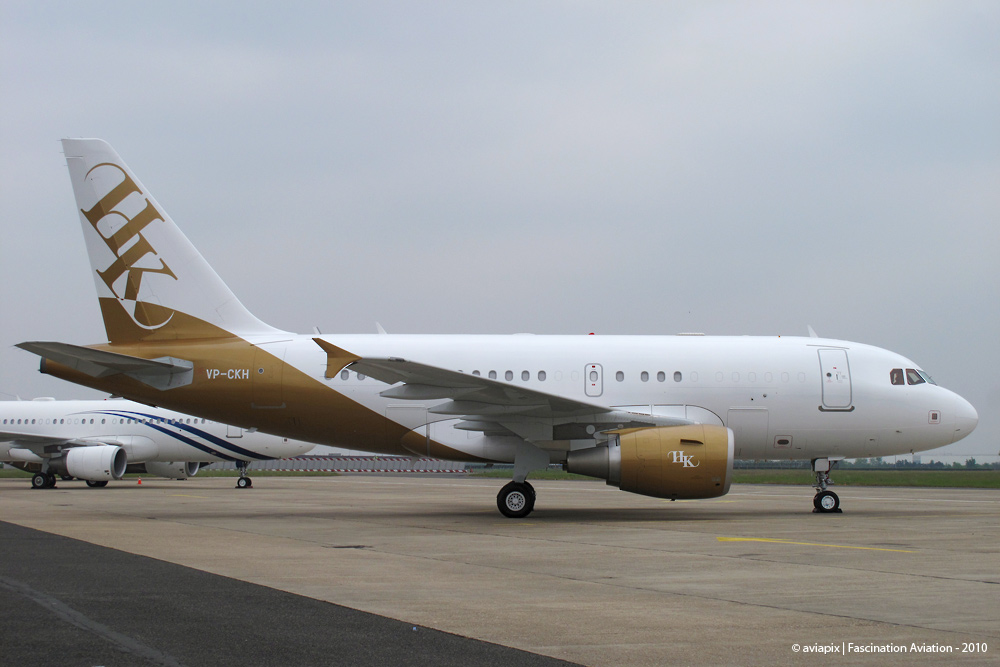
Airbus A318 Elite (VP-CKH) – Harry Akande
Bombardier Challenger 604 (VP-BJM) – M. Adenuga / Southern Air
Bombardier Global Express XRS (VP-CNA) – M. Adenuga / Southern Air
Bombardier Global Express XRS (VQ-BJA) – A. Johnson
Bombardier Global Express XRS (VP-CEO) – F. Alakija
Bombardier Global Express XRS (N104DA) – A. Dangote
Learjet 45 (N104DN) – A. Dangote
Dassault Falcon 2000LX (M-DARA) – Dangote Group / Dansa Juice
Bombardier Challenger 300 (VQ-BMJ) – Executive Jets Services – for sale
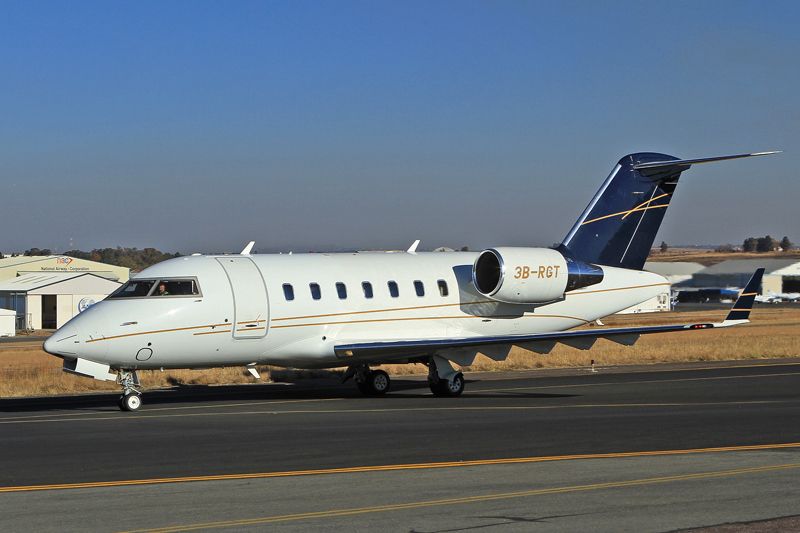
Bombardier Challenger 605 (3B-RGT) – GTBank / Executive Jets Services / OSA Aviation
Bombardier Challenger 605 (N605GF) – J. Ibrahim / Global Fleet
Bombardier Challenger 605 (VP-CSI) – I. Sanomi / Gembrook Energy Projects
Dassault Falcon 50 (M-SNSS) – S. Tommey / Osmoserve Global
Hawker 800A (N118KL) – M. Lawal / ACE / CAMAC Aviation / West Link Airlines
Hawker 900XP (N638MA) – Midway Airlines / Okin Travels
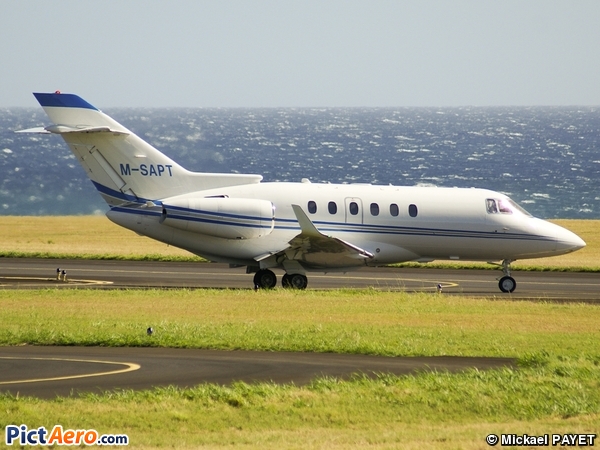
Hawker 900XP (M-SAPT) – T.Y. Danjuma / SAPETRO Aviation
Bombardier Challenger 605 (M-SAPL) – T.Y. Danjuma / SAPETRO Aviation
Hawker 900xp (ZS-SGV) – J. Okoloko / Notore Chemical Industries
Gulfstream GIV (N990EA) – E. Azudialu / Nestoil
Gulfstream GIV (N52MK) – M. Indimi / Oriental Energy Resources
Gulfstream GIV (M-PZPZ) – A. Eze / Triax Airlines
Gulfstream GV (M-USBA) – Namco Nigeria / Shukra
Gulfstream G550 (N169SD) – S. Dantata / MRS Group – for sale
Cessna 525 CitationJet CJ1+ (N5UD) – Dantata
Embraer EMB135BJ Legacy 600 (N357TE) – I. Rabiu / BUA Group
Dassault Falcon 7X (VP-BGG) – Chagoury Group
Gulfstream GIV (N707EA) – E. Adeboye / Emmanuel Aviation
Bombardier Challenger 601 (N431CB) – A. Oritsejafor
Bombardier Challenger 604 (N664D) – D. Oyedepo / Dominion Air / World Mission Agency
Hawker 800XP (ZS-PCY) – Oando / Triton Aviation
Hawker 900XP (ZS-BOT) – Oando / Triton Aviation / Hangar8
Hawker 4000 (ZS-ZOT) – Oando / Triton Aviation / Hangar8
Bombardier Challenger 300 (VP-BJT) – Triton Aviation

Private and corporate propeller aircraft:
Beechcraft 1900D (5N-WCI) – Dominion Air
Beechcraft 1900D (5N-MPA) – Mobil Nigeria
Beechcraft 350 King Air (5N-MPB) – Mobil Nigeria
Beechcraft 1900D (5N-MPN) – Mobil Nigeria
Beechcraft 350 King Air (N404SA) – Dantata / MRS Group
Beechcraft 350 King Air (5N-FLS) – Julius Berger
Beechcraft 350 King Air (5N-FLY) – Julius Berger
Beechcraft 200 King Air (5N-IHS) – Wings Aviation – stored at Lanseria
Cessna 208A Caravan I Amphibian (5N-BIW) – Pan African Airlines
Pilatus PC-12 (5N-BNG) – Bala Ibn Na’Allah
Piper Aztec PA-23 (5N-BGZ) – Africa Contracts and Equipment / MishAviation

Corporate and private helicopters:
Agusta A109S Grand (M-AZKL) – Azikel Air
Sikorsky S-76C (5N-BQG) – Nestoil

Updates, additions and corrections are appreciated.

Please note that various foreign charter companies are also active on the Nigerian market, such as VistaJet, Hangar8, Empire Aviation Group, Elit’Avia, FAI rent-a-jet, National Airways Corporation, TAG Aviation, AVjet Corporation, and AmJet Executive. Their aircraft are not included in the list above. The same goes for the foreign registered aircraft operated by JetAlliance (Austria/Germany) for Prime Air Services and Izy Air.


SOURCE:  https://nigerianaviation.wordpress.com/tag/izy-air/

Saturday, 27 February 2016

General Atomics Flies Extended-Range 'Long Wing' Reaper

The MQ-9/Predator B Long Wing variant with new 79-foot wingspan makes its first flight on February 18. (Photo: General Atomics)


General Atomics Aeronautical Systems (GA-ASI) has flown an extended-range, extended-wing variant of its MQ-9 Predator B that is capable of staying aloft for more than 40 hours. Under development as part of the manufacturer’s “Certifiable Predator B” effort, the remotely piloted aircraft (RPA) is being built to NATOairworthiness standards.

The MQ-9 Reaper ER Long Wing completed its first flight on February 18 from GA-ASI’s Gray Butte flight-test facility in Palmdale, Calif., northeast of Los Angeles. The new variant demonstrated its ability to launch, climb to an initial flight-test altitude of 7,500 feet, complete basic airworthiness maneuvers, and land without incident, the manufacturer said.

The Long Wing aircraft has a 79-foot wingspan, 13 feet longer than the standard Reaper, which with greater internal fuel capacity increases its endurance from 27 to more than 40 hours. The wings have additional hard points for carrying external stores and provisions for leading-edge deicing and integrated low- and high-band RFantennas. Other improvements include short-field takeoff and landing capability and spoilers on the wings that support precision automatic landings, GA-ASI said.

The longer wingspan is a component of the Certifiable Predator B effort to produce a NATO-certifiable production aircraft by early 2018. The certifiable aircraft is the basis for the UK Royal Air Force’s new “Protector” platform, which will replace its current MQ-9 Reaper fleet.

“Predator B ER’s new 79-foot wingspan not only boosts the RPA’s endurance and range, but also serves as proof-of-concept for the next generation Predator B aircraft that will be designed for type certification and airspace integration,” said CEO Linden Blue. “The wing was designed to conform to STANAG 4671 (NATO airworthiness standard) and includes lightning and bird strike protection, non-destructive testing, and advanced composite and adhesive materials for extreme environments.”

Under a quick-reaction capability tasking, GA-ASI earlier delivered to the U.S. Air Force more than 40 Reapers with wing-mounted external fuel tanks that increase its endurance to 35 hours. The service first fielded the extended-range Reaper last August.

At the recent Singapore Airshow, China’s National Aero-Technology Import & Export Corporation (Catic) exhibited a model that roughly resembled the new Reaper variant. However, without explanation, Catic removed the model of the Chengdu Wing Loong II soon after the airshow began.

Republic Airways Declares Bankruptcy

A Republic Embraer E170 approaches Connecticut's Bradley International Airport. (Photo: Flickr: Creative Commons (BY-SA) byredlegsfan21)


Indianapolis-based Republic Airways, one of the largest regional airlines in the U.S., filed for Chapter 11 bankruptcy protection on Thursday, leaving lease deals on several regional jets subject to restructuring and imperiling an order for 40 Bombardier C Series narrowbodies. One of the C Series largest customers, Republic accounts for some 16 percent of the total firm order backlog of 243 C Series jets.

The bankruptcy filing comes after several months of attempts to restructure obligations on what Republic characterized as “out of favor” aircraft and years of struggles related to a shortage of pilots willing to fly for the wages offered by U.S. regional airlines. Republic Airways subsidiaries Republic Airlines and Shuttle America fly a combined fleet of some 240 airplanes for all three major U.S. legacy carriers, including 41 fifty-seat Embraer ERJ-145s for code-share partner Delta Air Lines.

While Republic did manage to reach a new collective bargaining agreement with its pilots some four months ago, it didn’t happen in time to overcome an exodus of pilots to better paying airlines during several years of substandard compensation at the Indianapolis-based regional. Forced to cut schedules due to a shortage of pilots, Republic found itself the subject of a lawsuit filed last October by Delta for resulting service and breach of contract related to the major airline’s subsequent inability to schedule further service.

Republic said it plans to continue normal business operations while it restructures its finances and contractual relationships. It added that it controls sufficient assets and liquidity to meet working capital requirements and operating expenses during the restructuring process.

“We worked hard to avoid this step,” said Republic chairman and CEO Bryan Bedford. “It’s become clear that this process has reached an impasse and that any further delay would unnecessarily waste valuable resources of the enterprise. Our filing today is a result of our loss of revenue during the past several quarters associated with grounding aircraft due to a lack of pilot resources, combined with the reality that our negotiation effort with key stakeholders shows no apparent prospect of a near-term resolution.”

Cool Boeing Aircrafts for the week


Southwest Airlines unveils “Tennessee One”


Southwest Airlines unveils a high-flying tribute to the state of Tennessee with dedicated aircraft.

Southwest Airlines (Dallas) today (February 22) celebrated more than 30 years of service in the state of Tennessee with the unveiling of the airline’s newest specialty aircraft—Tennessee One—a Boeing 737-700, emblazoned with an artist’s rendition of the Tennessee State flag.

In true Music City fashion, Southwest honored Nashville Employees and Customers with live music performances by Republic Nashville Recording Artist, A Thousand Horses, and Columbia Recording Artist, Maren Morris, celebrating with community members, partners, and state and local government officials.

Southwest continued the celebration, boarding Tennessee One with Employees, Customers, and community members to take flight from Nashville to Memphis, Tenn. During the flight, the beat continued as guests were entertained with a surprise Live at 35® inflight performance by Tennessee native and RCA Records Nashville Recording Artist, Chris Young, along with Republic Nashville Recording Artist, Cassadee Pope. The pair, who have been on the road for Young’s I’m Comin’ Over Tour, treated Customers to an acoustic version of their duet, “Think Of You.” The flight arrived to Memphis with a water arch salute and a fanfare welcome by Memphis Employees, airport leadership, community members, and local and state officials, with a special performance by Memphis favorite, Ghost Town Blues Band.

Southwest Airlines began service in Nashville on March 18, 1986, with eight nonstop departures to two cities. The airline currently operates more than 80 daily nonstop departures to 33 destinations from Nashville. Southwest began service in Memphis on Nov. 3, 2013, with six nonstop departures to five cities. The airline currently operates nine daily nonstop flights to six destinations from Memphis.

Tennessee One joins ten other 737s in the Southwest fleet that carry unique, state-themed paint schemes: Arizona One, California One, Colorado One, Florida One, Illinois One, Lone Star One (Texas), Maryland One, Missouri One, Nevada One, and New Mexico One.

Photo: Southwest Airlines. Boeing 737-7H4 N922WN (msn 32461) is now “Tennessee One”. In 2009 this airframe was the famous, but short-lived, Bar Rafaeli of the Sport Illustrated Sport Illustrated swimsuit issue.

Norwegian takes delivery of its first Boeing 787-9 Dreamliner


Boeing (Chicago, Seattle and Charleston), MG Aviation Ltd and Norwegian Air Shuttle yesterday (February 23) celebrated the delivery of the Scandinavian low-cost carrier’s first Boeing 787-9 Dreamliner (EI-LNI, msn 37307).

The Swedish actress Greta Garbo (above) on the tail of Norwegian’s first 787-9, leased from MG Aviation. Its first commercial flight will commence on February 27, from Oslo to Orlando.

Top Photo: Norwegian Air Shuttle. From left to right: Captain Tomas Hesthammer, Cabin Chief Patima Mansornplang, CEO Bjørn Kjos, Chairman of the Board, Cabin Crew Olga Manzano Jimenez, Cabin Chief Joseph Gabriel, Cabin Crew Jamion Bergan and Captain Peter Jacobsson

Norwegian leased the airplane through an agreement with MG Aviation. The delivery is also the first Dreamliner to MG Aviation, the aviation leasing arm of Jordache Enterprises which has three additional 787s on order.

Norwegian already operates eight 787-8s and will use its 787-9s to open up new routes across North America, South America and Southeast Asia with its increased range and capacity.

The 787-9 complements and extends the super-efficient 787 family. With the fuselage stretched by 20 feet (6 meters) over the 787-8, the 787-9 will fly more passengers and more cargo farther with the same exceptional environmental performance — 20 percent less fuel use and 20 percent fewer emissions than similarly sized airplanes.

Norwegian serves more than 130 destinations across Europe, North Africa, the Middle East, the USA and Southeast Asia, with a fleet that includes 90 Next-Generation 737-800s and eight 787-8s. In October 2015 the airline placed the largest single order for 787-9s from a European carrier, ordering 19 airplanes valued at more than $5 billion at list prices.

MG Aviation is part of Jordache Enterprises, the Nakash family’s global conglomerate that also operates Arkia Israeli Airlines.

The Swedish actress Greta Garbo on the tail of Norwegian’s first 787-9, leased from MG Aviation. Its first commercial flight will commence on February 27, from Oslo to Orlando. (PRNewsFoto/Boeing)

Above Photo: Boeing. Boeing 787-9 EI-LNI (msn 37307) departs from Paine Field near Everett, WA.

Norwegian’s first of a total of 30 Boeing 787-9 Dreamliner plane landed at Oslo Gardermoen Wednesday morning.

Qatar Airways to continue Southeast Asia expansion with new nonstop routes to Cebu and Hanoi


Qatar Airways is planning further expansion in Southeast Asia in 2016, driven by the resumption of flights to Cebu and a new nonstop service to Hanoi. Qatar had dropped Cebu in 2012, while Hanoi has been served via Bangkok since it was launched in 2010.

Qatar already has more Southeast Asian destinations than any Gulf airline: 12. It currently has 147 weekly passenger flights to Southeast Asia, having added 25 frequencies in 2015.

In addition to Cebu, Qatar is planning to add at least one more undisclosed destination to its Southeast Asian network in 2016. It has been seeking approval to serve Surabaya, which would be Qatar’s third Indonesian destination, and has also been evaluating Chiang Mai, which would be its third destination in Thailand.

Belo Horizonte Tancredo Neves International Airport's future lies with its Airport City/Aerotropolis


In the year in which Brazil is hosting the Olympic Games, two years after a successful (except for the Brazilian national soccer team) FIFA Soccer World Cup, the country is in the headlines for the wrong reasons: namely Zika the mosquito-borne sickness rather than Zico the footballer. But whatever the outcome of that, the Brazilian authorities have committed time, energy and determination to improving transport infrastructure, especially the airports. They are in the midst of an airport privatisation programme that is now in its third stage.

The auction of Belo Horizonte Tancredo Neves International Airport – in the home city of Brazilian President Dilma Rousseff – came during the second stage, although Brazil’s difficult economic situation may mean it is still too early to be able to draw conclusions on its success or otherwise.

Belo Horizonte offers some advantages to its investors, but several disadvantages too. One of those advantages is the development there of Brazil’s first airport city and associated ‘aerotropolis.’

This report looks at present and future growth trends at the airport, local airport statistics, how the airport matches up to its peers across a range of metrics, at construction activities, and at its new ownership. It concludes that the airport's future is inextricably linked to the continuing development of its airport city.

Boeing launches the Next-Generation 737 Boeing Converted Freighter


Boeing (Chicago and Seattle) on February 24 launched the Next-Generation 737-800 Boeing Converted Freighter (BCF) with orders and commitments for up to 55 conversions from seven customers.


Through its freighter conversion program, Boeing transitions passenger airplanes into freighters, extending the economic life of the airplane. The 737-800 is the first Next-Generation 737 that Boeing has offered for conversion. While large freighters carry high-density cargo on long-range routes, the 737-800BCF will primarily be used to carry express cargo on domestic routes.

The 737-800BCF carries up to 52,800 pounds (23.9 metric tons) of cargo, flying routes of nearly 2,000 nautical miles (3,690 kilometers).

Twelve pallet positions – 11 standard pallets and one half-pallet – provide 5,000 cubic feet (141.5 cubic meters) of cargo space on the main deck. This will be supplemented by two lower-lobe compartments, combined providing more than 1,540 cubic feet (43.7 cubic meters) of space for revenue-generating cargo.

Boeing has won a total of 30 firm orders and 25 commitments for the 737-800BCF:

YTO Airlines, based in Hangzhou, China, has ordered 10 conversions with commitments for 10 additional conversions

China Postal Airlines, based in Beijing, has ordered 10 conversions

GE Capital Aviation (GECAS), which will provide the initial airplane for conversion, has ordered five conversions

An unannounced customer has ordered five conversions with two commitments
In addition, Boeing has secured 13 commitments for conversions from:

SF Airlines, based in Shenzhen, China

Cargo Air, based in Sofia, Bulgaria

An unannounced customer

The first 737-800BCF is expected to be delivered in the fourth quarter of 2017.

Existing passenger airplanes will be modified at select facilities located near conversion demand, including Boeing Shanghai. Modifications include installing a large main-deck cargo door, a cargo-handling system and accommodations for up to four non-flying crew members or passengers.

Photo: Boeing.

Boeing, AeroMexico and Mexican Government to collaborate on sustainable aviation biofuel


Boeing, AeroMexico and Mexico’s Airports and Auxiliary Services (ASA) will collaborate with a biojet program supported by Mexico’s Sector Fund for Energy Sustainability (SENER-CONACYT) to advance research and development of sustainable aviation biofuel in Mexico.

The initiative and coordinated through the Mexican Bioenergy Innovation Center, will support Mexico’s aviation sector as well as its environmental and socio-economic goals. Executives at Boeing, Aeromexico, ASA and the Potosinian Institute of Scientific and Technological Research (IPICYT) formalized the initiative at a ceremony in Mexico City.

Through the agreement, IPICYT will lead a broader aviation biofuel development effort involving 17 institutions including Aeromexico and Boeing; nine CONACYT research centers; Mexican companies Pemex, QENER and Tratamientos Reciclados del Sureste; the Mexican Petroleum Institute; Masdar Institute of Science and Technology in United Arab Emirates; and the U.S. Joint BioEnergy Institute.

The Mexican government and participating institutions will fund the effort for four years, aiming to develop a self-sustaining business model. Research will be conducted on biomass sourcing, fuel production, sustainability and lifecycle assessment, and aviation biofuel market development.

Aviation biofuel feedstocks in Mexico are expected to include jatropha, salt-tolerant Salicornia and sewage sludge. The initiative’s projects are expected to meet sustainability criteria established by the Roundtable on Sustainable Biomaterials.

Using sustainably produced biofuel reduces lifecycle carbon dioxide emissions by 50 to 80 percent compared to conventional petroleum fuel, according to the U.S. Department of Energy.

Copyright Photo: AirlinersGallery.com.

Embraer rolls out the first E190-E2


Embraer, the world’s leading manufacturer of commercial jets up to 130 seats, on February 25, 2016 took a step in the consolidation of its leadership by presenting the E190-E2, the first E2 jet – Embraer´s second generation of the E-Jets family of commercial aircraft. The aircraft´s maiden flight is scheduled for the second half of 2016, with entry into service scheduled for 2018. The ceremony was held at the Company´s plant in Sao Jose dos Campos.

“Today we have taken another step into the future of Embraer commercial aviation with the world premiere of our second-generation E-Jets,” said Paulo Cesar Silva, President & CEO, Embraer Commercial Aviation. “I’m sure that as a result of this event, the market´s interest in the E2 will grow even further, increasing the commercial success of this program throughout the world.”

With an investment of USD 1.7 billion, the E2 program was launched in June 2013 and reinforces Embraer’s commitment to continuously invest in its commercial aviation products as well as maintain market leadership in the segment of 70 to 130 seats. The aircraft will have state-of-the-art engines, which, combined with new aerodynamically advanced wings, full fly-by-wire flight controls, and improvements to other systems, will deliver significant reductions in fuel burn, maintenance costs, emissions, and external noise.

Since the E2 was launched, the program has reached 640 commitments, 267 of which are firm orders and 373 of which are options and purchase rights, from both airline customers and leasing companies. Currently, the E-Jets are operating with about 70 customers in 50 countries and, with over 50% market share, they are the global leader in the segment of aircraft with up to 130 seats.

“The rollout marks the completion of the assembly of the first E190-E2 and paves the way for the start of the tests that will lead to the first flight,” said Luis Carlos Affonso, Senior Vice President Operations & COO, Embraer Commercial Aviation. “We are delighted to reach this phase of the program, considering all of the technical and economic objectives set out at its inception.”

This aircraft is the first of four prototypes that will be used in the E190-E2 certification campaign. Two additional planes will be added for the E195-E2 campaign, entry into service for which is expected in 2019, and three more will be used in the E175-E2 campaign, which is scheduled to enter service in 2020.

The E190-E2 has the same number of seats as the current generation E190 and can be configured with 97 seats in dual class service or with 106 seats in a single class layout. Additionally, the range of the E190-E2 has been significantly increased over the current generation aircraft, by 400 nautical miles, with the capacity to cover distances of 2,800 nautical miles.

Photo: Embraer.

NAPIMS Terminates Bristow Helicopter Services Contracts


The National Petroleum Investment Management Services (NAPIMS), a subsidiary of the Nigerian National Petroleum Corporation (NNPC) has terminated all Bristow helicopter services contracts with its joint partners.

This followed the accident involving Sikorsky helicopter with registration 5B-BJQ owned and operated by Bristow Helicopters Limited on February 3, 2016, which led to the suspension of the aircraft type in the fleet of the company by the Nigerian Civil Aviation Authority (NCAA).

In a letter written to the Managing Director, Total Upstream Nigeria Limited, dated February 14, 2016, obtained by THISDAY, NAPIMS wrote: “Barely six (6) months after a helicopter belonging to Bristow Helicopter crashed in August 12, 2015 killing a number of persons, another Bristow helicopter, a Sikorsky S76C++ with registration 5N-BOJ that departed Erha Platform enroute Lagos ditched into the Atlantic Ocean on February 3, 2016 with eleven (11) persons including two (2) crew members narrowly escaped death.”


The letter, which was signed by Group General Manager, Dafe S. Sejebor said NAPIMS noted that these accidents bring to question Bristow’s safety standards, “inspection programmes and frequency of maintenance, which has culminated in Nigerian Civil Aviation Authority suspending indefinitely Bristow’s Sikorsky S76++ from further operations in Nigeria.’

NAPIMS therefore declared: “Accordingly, all JV/PSC companies are hereby directed to terminate all aviation contracts awarded to Bristow Helicopters in accordance with the provisions of the aviation contracts. Bristow Helicopters may be allowed to participate in bids and operate in Nigeria upstream oil and gas only after a thorough and satisfactory safety audit has been carried out and all observed lapses adequately addressed,” the letter with reference number, NAP/GGM/02.04 said.

“You are hereby requested to invite the next lowest bidders in all tenders that Bristow won for price negotiations and facilities inspection with full NAPIMS participation in order to take the remaining scopes of the contracts presently being run by Bristow, the company told Total.

On February 21, 2016, NCAA issued a statement giving further directives and ordered all airlines operating the Sikorsky S76C ++ series to carry out a safety inspection on this helicopter type with immediate effect.

“The authority must immediately be provided with evidence of accomplishment of this directive. This action is in addition to the suspension of Bristow Helicopters operations of S-76 C ++ series and the ongoing audit. It is pertinent to point out that this directive is without prejudice to the ongoing investigation by the Accident Investigation Bureau (AIB)‎ which the Authority is fully supporting,” NCAA said.


Tags: Business, Featured, Nigeria